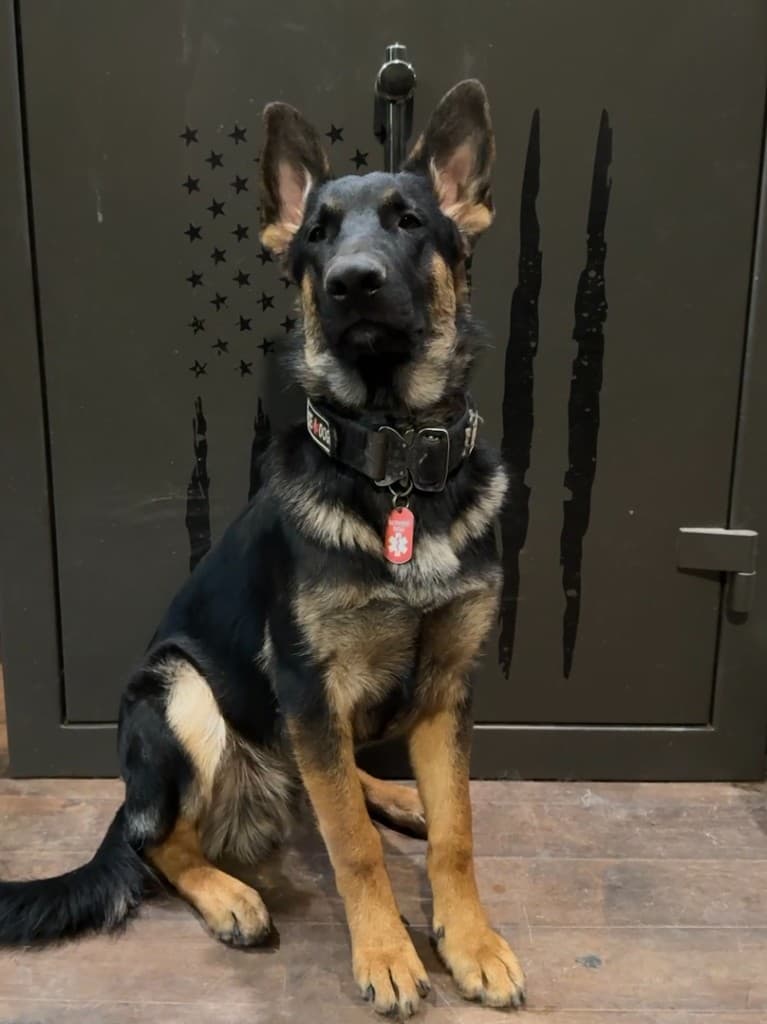
Medical alert training is not magic. It is not mystical. It is staged, methodical work built on reinforcement, pattern recognition, and — if you are lucky — a dog with the right kind of brain who eventually connects dots you cannot safely teach them yourself.
Here is how it actually works.
Stage One: Train the Alert Behavior
Before a dog can alert to anything, they need to understand what the alert itself looks like. In my case, I teach my dogs to jump on me. Not politely. Not gently. Hard. Both paws to the chest or torso, enough force that I feel it through distraction, through sleep, through whatever might be pulling my attention elsewhere. I reward that behavior with a treat. Simple operant conditioning. Jump equals reward. The dog learns the action. That is all this stage is.
Stage Two: Add the Cue
Once the alert behavior is solid, I add a cue. I cough, and then I immediately cue the alert. The dog jumps on me. I reward them. At this point, the cough is not connected to anything real. It is a false positive by design. The dog is learning to associate the sound of a cough with the alert behavior they already know. Cough equals alert equals reward. Still straightforward. Still entirely within my control.
Stage Three: The Dog Has to Figure Out the Rest
Here is where it gets complicated, and where I cannot ethically push the training further on my own timeline. In my case, I cannot almost kill myself to teach a dog the biochemical markers of anaphylaxis. I get enough near-death experiences each week just living my life. I am not going to deliberately induce one for training purposes.
When I was younger, I could take smaller exposures and survive them without hitting full crisis mode. But allergies do not get better with age. They get worse. What used to be manageable is now life-threatening. What used to give me time to react now does not. I no longer have the luxury of controlled exposure, which means I can no longer engineer the training scenario where the dog learns to detect the biochemical shift before the cough begins.
That part has to happen on its own. The dog has to encounter enough real events — enough moments where my body chemistry changes in ways I cannot fake and cannot safely replicate — and eventually, if the dog has the sensitivity and the drive, they make the connection. They realize the cough is not the primary marker. The cough is the late-stage symptom. The scent change, the physiological shift, the thing their nose is picking up before I am even aware of it — that is the real signal.
Typically, this takes eight to eighteen months. Sometimes longer. I expected Charles to start making that connection around two years old, if he made it at all. Not every dog does. Some dogs are brilliant at the cued alert and never generalize beyond it. That is not a failure. That is just reality.
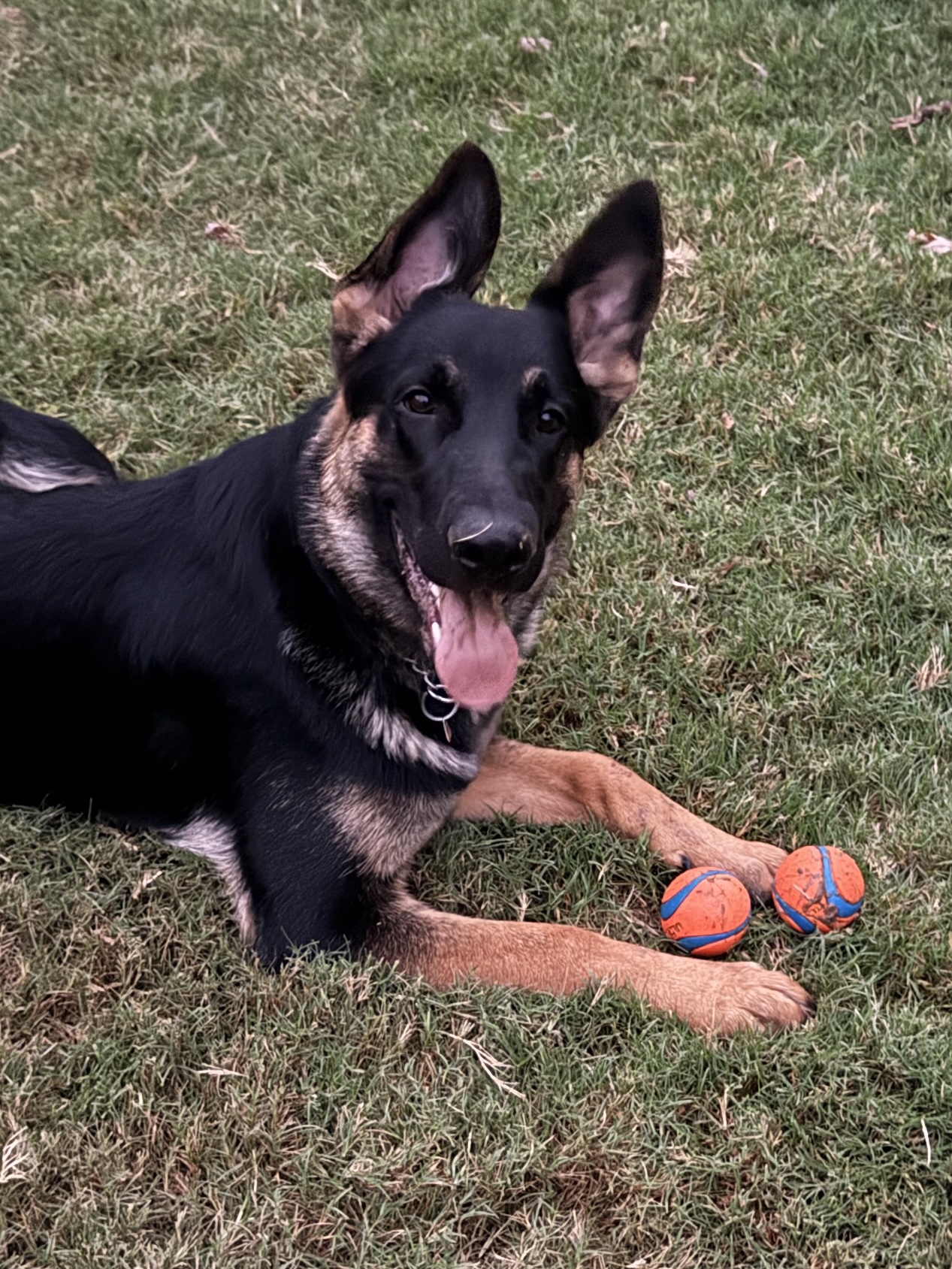
Charles Might Be Rewriting the Timeline
Charles is seven months old. Seven months. And I am watching something happen that I am still not entirely sure I believe.
The first time, we were at a restaurant I go to all the time. It is one of the safer places I know, but leaving the house is always Russian roulette no matter how careful you are. They seated us too close to the kitchen that night, and Charles would not settle under the table. He kept shifting, repositioning, refusing to lay down. I got frustrated with him. I thought he was being difficult. Then he started alerting. Constantly. Over and over, hitting me hard, refusing to stop.
My husband noticed I was turning red before I did. I had not started coughing yet. By the time we got outside, I was coughing hard, but Charles had been alerting before that symptom even started. I loved on him so much when it was over. But honestly, any scientist knows that one event means nothing. It could have been coincidence. It could have been a fluke. One data point is not a trend.
Then last weekend, we ordered food. My husband got something he does not normally get. Charles, instead of sitting next to me begging for scraps like he usually does, went to my husband and started alerting. Hard. Repeatedly. Frantic. There was plenty of food at the table. Charles has never bothered my husband for food before. He always targets me because I am the one with the allergy.
Except this time, my husband was the one in danger. He is deathly allergic to onions. Within minutes, he started breaking out. Then the coughing began. He got Benadryl into his system fast, and the rest of us watched him to see if he would need the EpiPens. Thanks to Charles, he only got a couple of bites before we all noticed something was wrong. The alert gave us time.
That is two out of two. That is not coincidence anymore. That is a trend.
I Still Do Not Entirely Believe It
The idea that Charles figured this out already is insane. If I were not the one watching it happen, I would not believe it. Honestly, I still do not believe it entirely. But the data is starting to look real. Two separate incidents. Two different people. Two different allergens. Same behavior from the dog. Same outcome: early warning before the visible symptoms started.
He is seven months old. This is not supposed to happen yet. The timeline says eight to eighteen months at minimum. The science says it takes time for the dog to encounter enough real events to make the biochemical connection. But Charles is sitting here at seven months, potentially doing the thing I thought would take two years.
Is it real? I do not know yet. The trend is promising, but it is still early. We need more data. More time. More incidents — which, unfortunately, will happen whether I want them to or not. That is the reality of living with severe allergies. But if this holds, if Charles continues to alert before symptoms start, if he keeps catching the biochemical shift instead of the cough, then I am watching something extraordinary unfold.
And if he does not, if this turns out to be beginner's luck or coincidence that does not hold up over time, that is okay too. He is seven months old. He has time. The timeline I expected was always just an estimate. But right now, cautiously and with appropriate skepticism, I am allowing myself to feel something I rarely feel when it comes to medical alert work.
Hope.
Strength stands watch.
And so does Charles.
Wendi Coffman-Porter
Real handler, real stories, real dogs. - FurPower.org