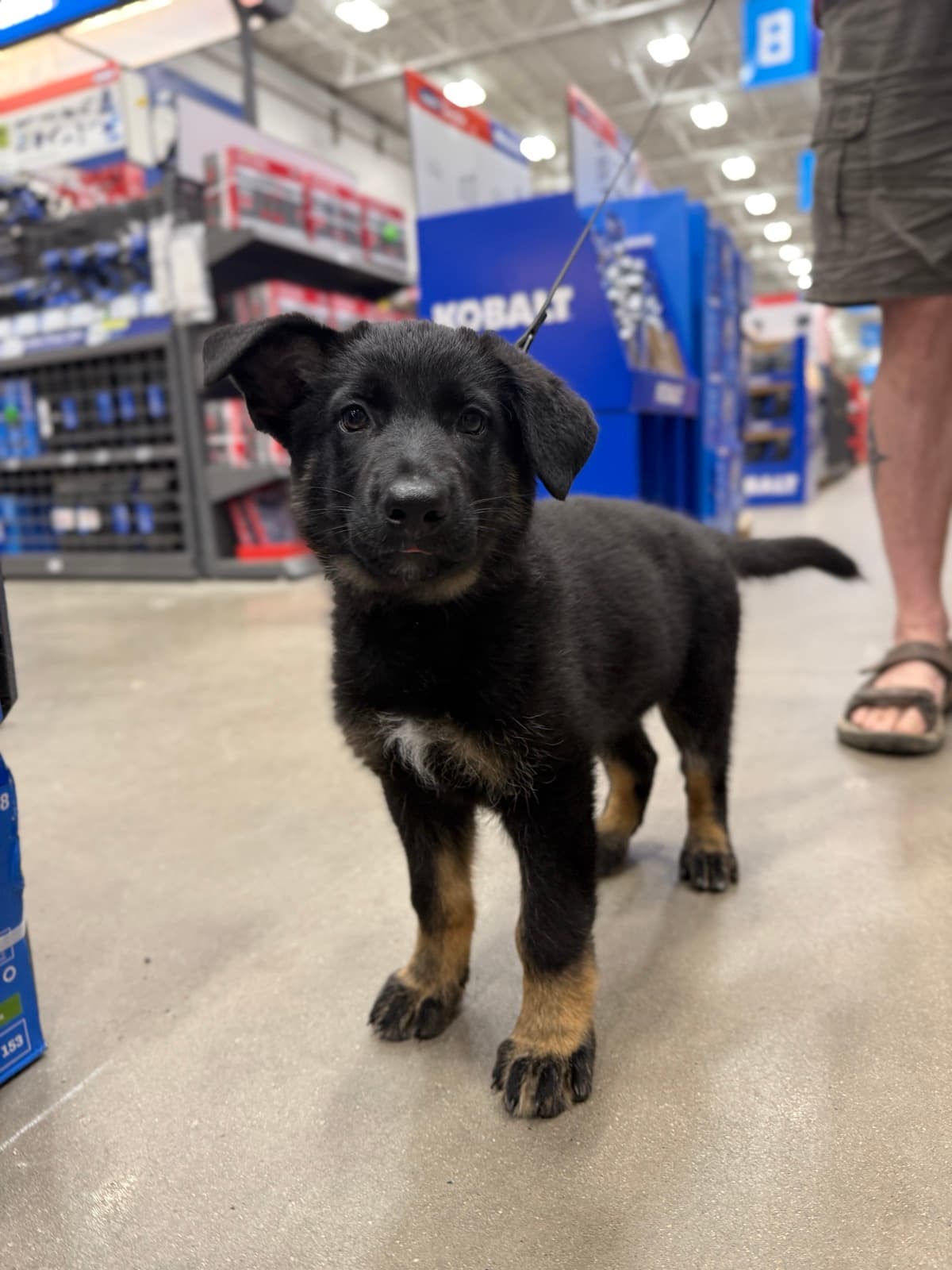
I have been training dogs my entire adult life. Obedience, advanced service work, sport dogs, behavior modification, the messy middle where fear and habit tangle together — I have lived in all of it, in boots that were muddy before “content” was a word people used for dogs.
Here is what most folks never really sit with: dog training is not one job. It is an entire universe. Saying “I train dogs” is a little like saying “I work with computers.” Computers touch medicine, banking, your pocket, the car you drive, the warfighter’s kit, the thermostat on your wall. No one human holds all of that in one head. Dogs are the same. There are more specialties than I could list without boring you, and after all these years I still know only a slice of what there is to know. That is not false modesty. It is the truth of a field that keeps teaching you humility if you are paying attention.
And still — knowing that — I made a mistake.
I bred my first litter, the Brooklyn 99 puppies, because I finally wanted my pick of the litter. I have helped raise and shape litters in a dozen ways over the years, but there was always at least one puppy in the bunch my heart did not reach for in the same way. Not this time. All six of these souls are genuinely wonderful. Each one carries their own constellation of strengths and their own honest weaknesses. In the right home, with the right humans and the right steady training, I believe every one of them could grow into a solid mobility assistance dog. One of them carries enough drive and nerve that, in a different life path, I can picture sport-level protection work without flinching.
The hard truth landed anyway: I cannot do this alone.
When people ask what a real service-dog pipeline needs, my answer has been the same for years. You need puppy raisers. Bodies. Schedules. Sleep someone else loses so the pup gets repetition in public, in crowds, in weather, in boredom, in the thousand tiny moments that do not film well but build a partner. I have said that out loud until my own voice should have bored me.
Then I looked at these six and whispered a different story to myself. I can handle it. I could pretend that was confidence. It was not. It was wishful thinking — and if I strip the excuse away, there was a small, selfish thread underneath that simply wanted to keep every single one of them in my orbit and not share the weight.
I was wrong. I own that.
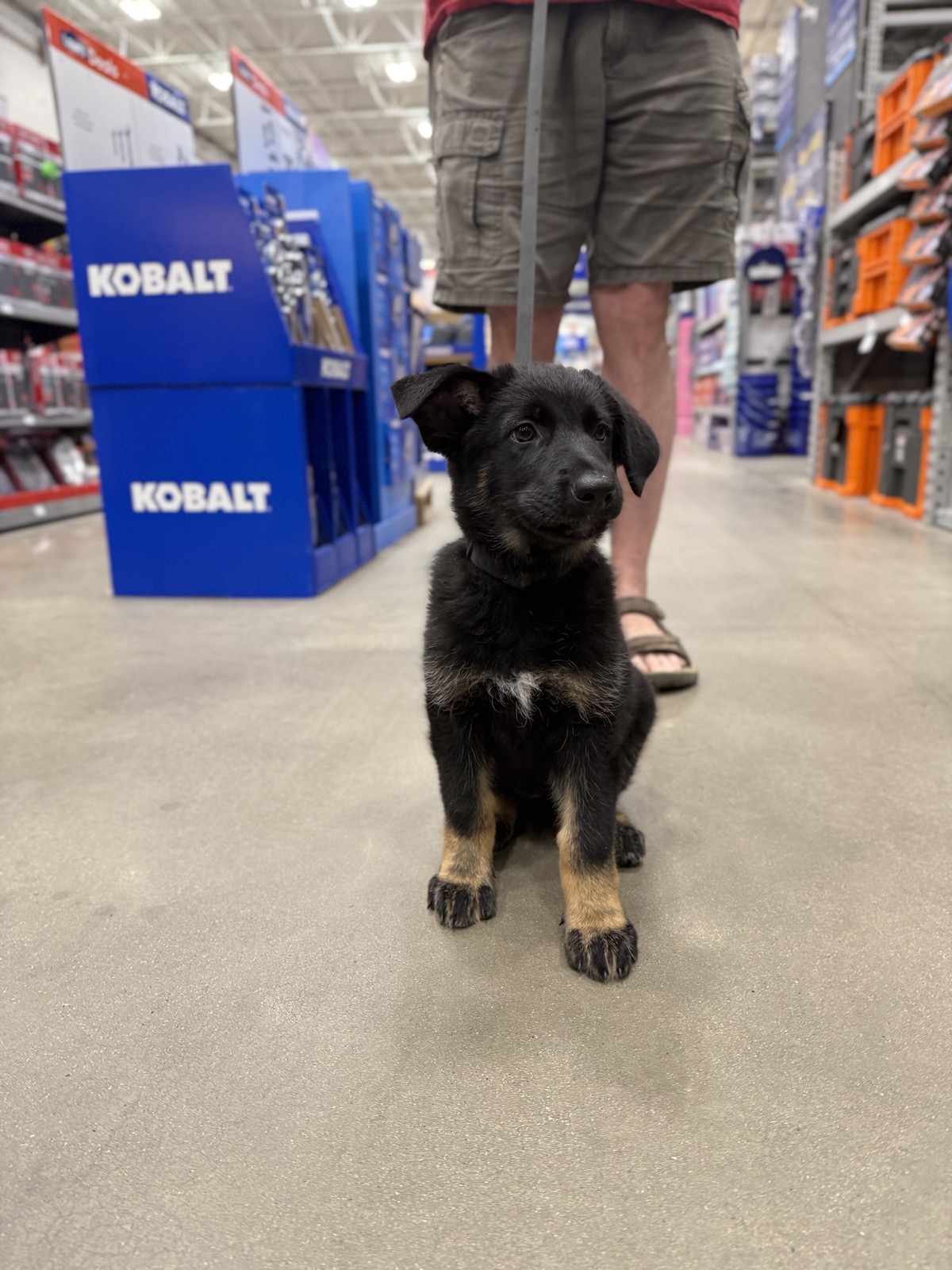
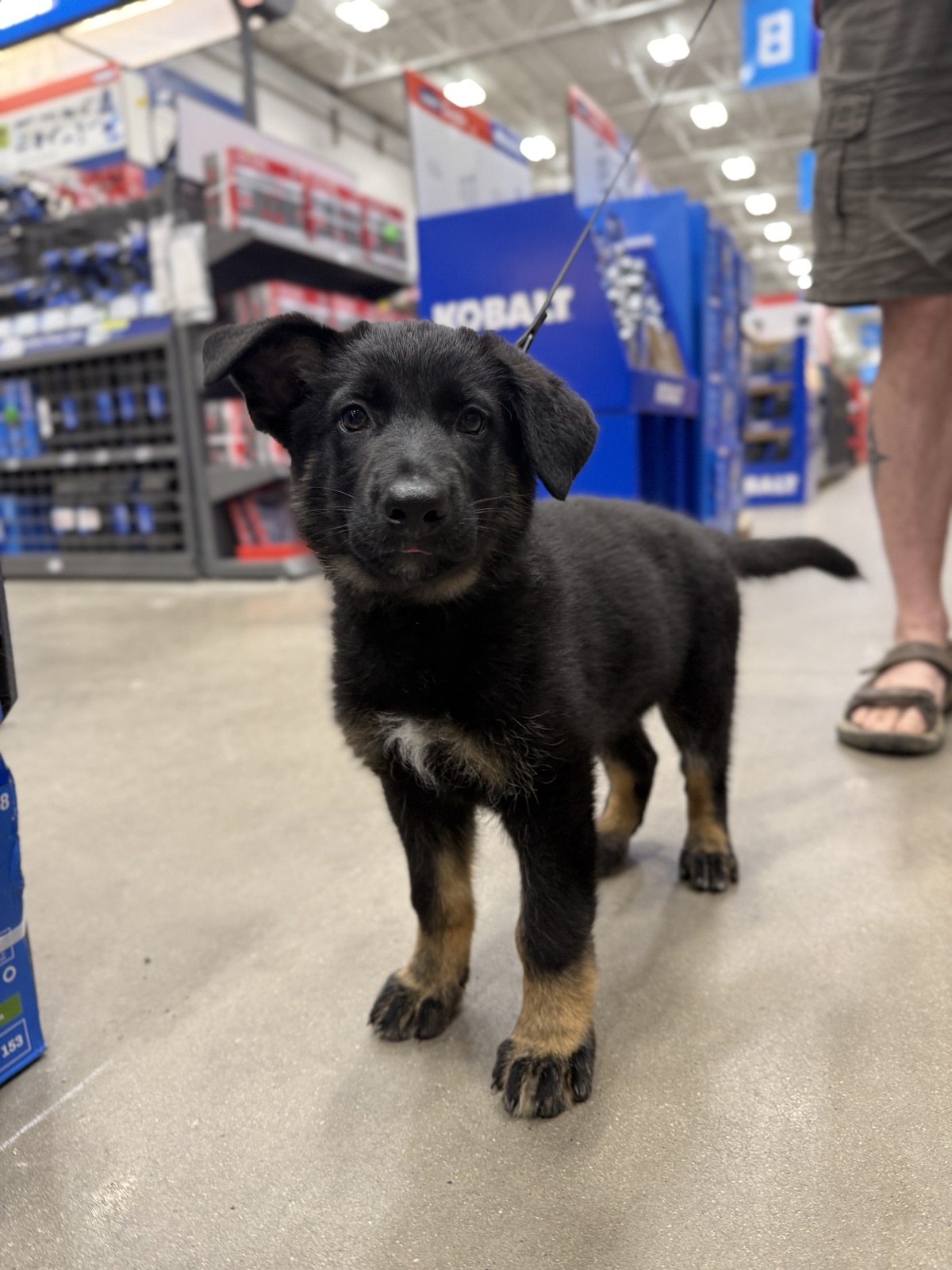
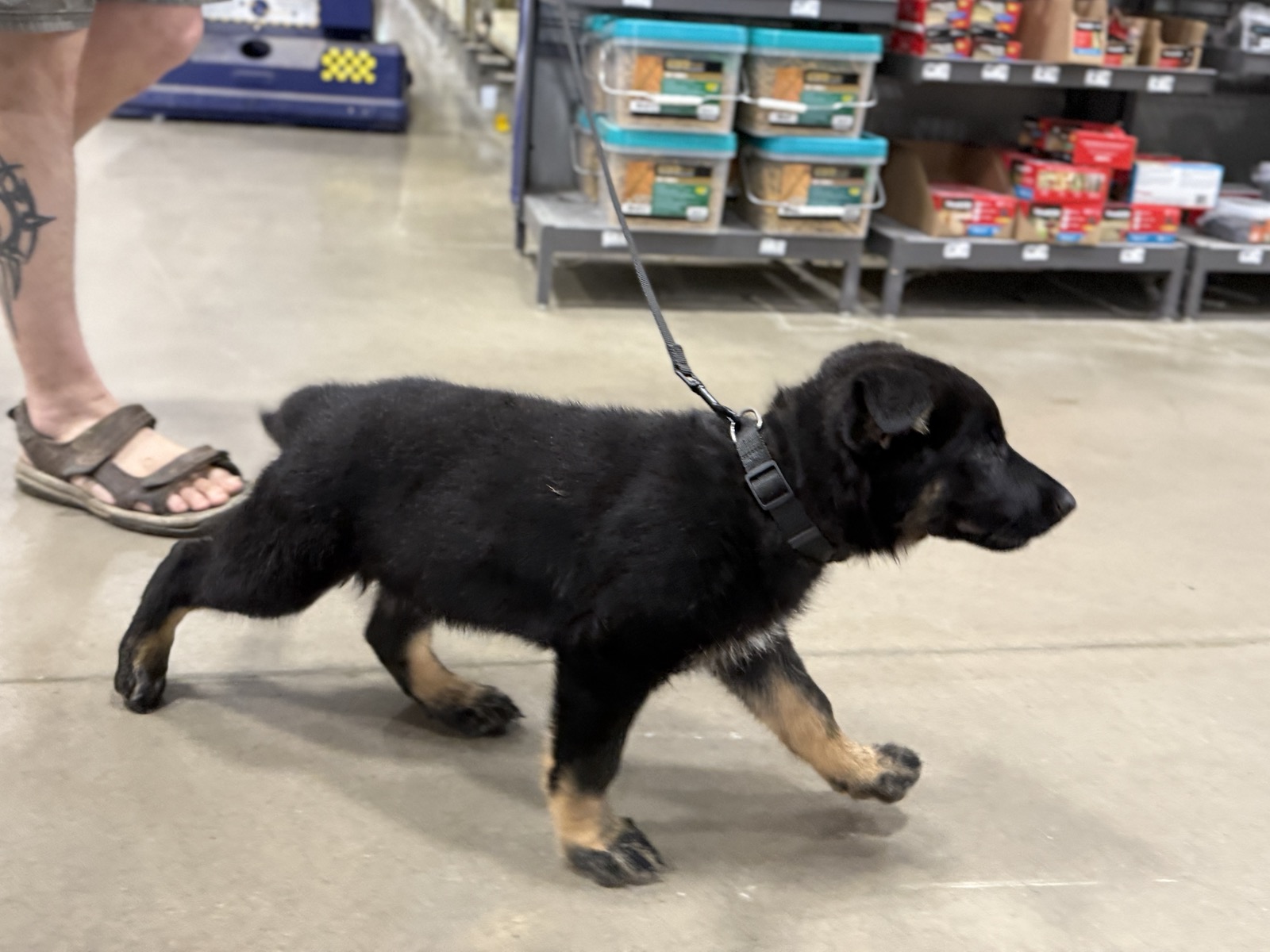
As of today they are eight weeks old. They are eating in their crates; as of today they are sleeping in their crates too. They are not finished products. They are not “fully potty trained” in some Instagram fantasy sense — they still need eyes on them, patience, and the kind of supervision that does not clock out because you are tired. But every one of them is already leash-trained and has been carried into the world on public socialization trips to Lowe’s. They walk calmly. They meet strangers without shrinking. Loud, strange noises roll off them without that brittle fear that breaks my heart in young dogs. If this kind of exposure keeps going with intention, these pups are going to walk into public access testing with their heads high.
They are ready for the next chapter. The question is whether the human side of the equation can meet what they deserve.
Here is the line I cannot blur.
I cannot personally raise and train all six to the standard they are owed while I also need my own service dog beside me in public. That math does not work. It would shortchange the puppies. It would shortchange the veterans who are waiting on dogs that are not half-trained, not half-socialized, not half-present because their raiser’s body gave out trying to be six people.
What I can do is help.
I will answer questions. I will talk training through with you. I will share the tricks and rhythms that have saved my sanity — for free, no invoice, no performance — for anyone raising their own service dog and trying to do it right. I am also working with American Legion Post 655 to help place these puppies with disabled veterans who need mobility help: picking up dropped items, opening doors, bracing or steadying a downed person so they can get back up, acting as a calm pass-block in crowds so the world does not press quite so hard against someone whose body already fought one war.
If you or someone you love is a disabled veteran looking for that kind of partner, these six are serious candidates. They are already ahead on leash manners and public exposure.
Raising and training your own service dog is not a weekend hobby. It is time, dedication, consistency, and the kind of love that shows up on ugly days. It is not easy. Done with honesty, it is one of the most rewarding roads I know.
If you are interested in one of the Brooklyn 99 puppies, or you just need a steady voice while you train your own dog, reach out. You can contact me through my X account (linked at the bottom of this site) or through American Legion Post 655.
And I need to say this clearly, because my heart needs it on the page: if the “perfect” service placement never comes for one of these dogs — wrong timing, wrong match, life doing what life does — I am okay with that. I will happily keep them. My home is not a failure destination. It is a home. These dogs do not owe the world a résumé to earn softness here. I want them in working homes where they change a veteran’s mornings. I also want them safe and loved more than I want a story that looks neat from the outside. The two are not enemies in my book.
The lesson this litter hammered home is simple even when it hurts: professionals still stumble. The measure of a person is not never falling. It is whether you tell the truth afterward and rearrange your life around what the dogs and the humans counting on you actually need.
These little ones deserve to go out and change someone’s life. They already matter if they never leave my porch.
Strength stands watch.
And so do I.
Wendi Coffman-Porter
Real handler, real stories, real dogs.
FurPower.org