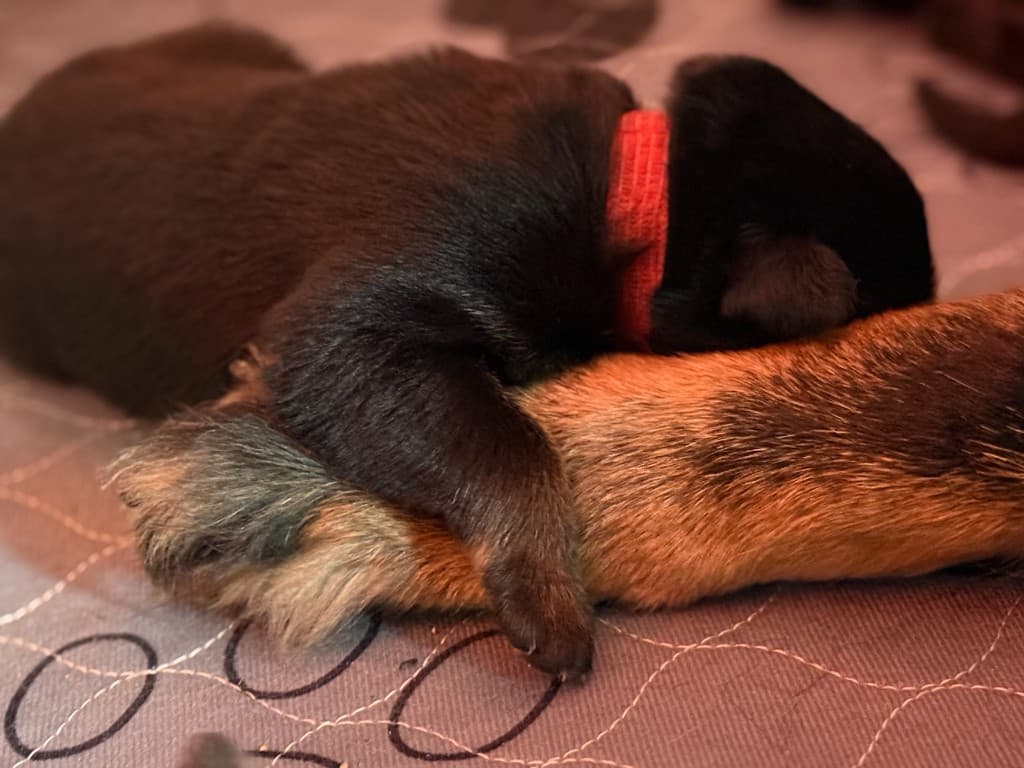
At FurPower, everything we do is about building resilient, loyal German Shepherds that can stand beside veterans as companions or service dogs. That starts from day one. One tool we're using with our current litter is Early Neurological Stimulation (ENS), often called the "Super Dog" protocol.
But first, this litter didn't come easy.
Our Litter's Story: Not Every Breeding Is Smooth
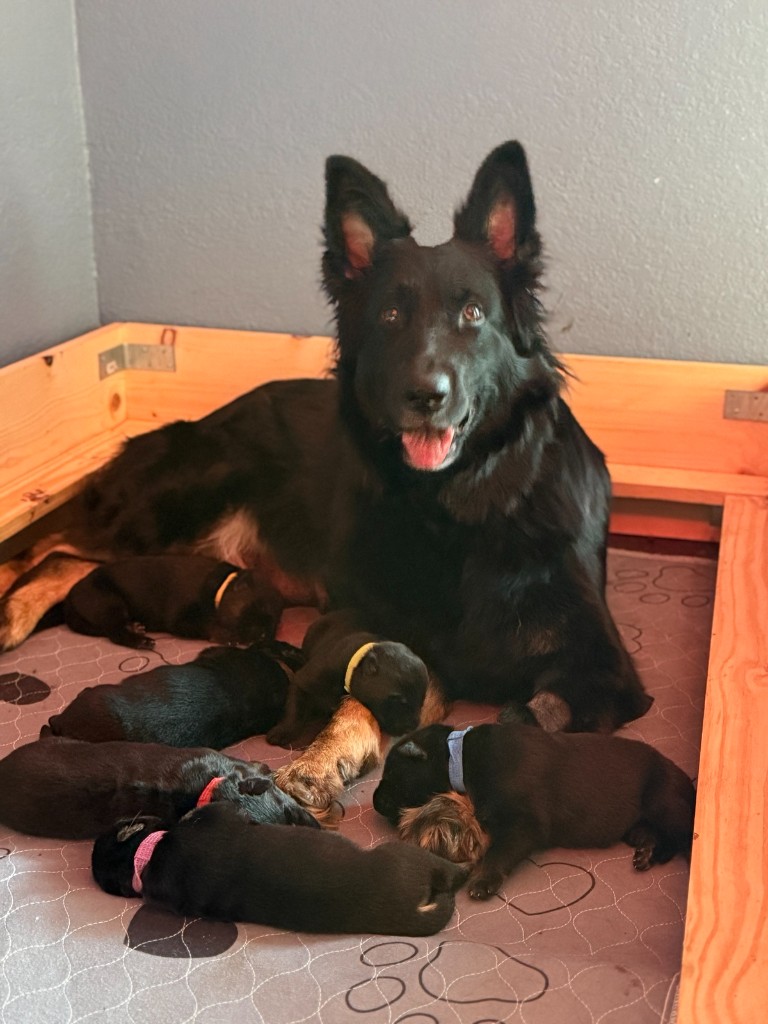
Birthing started out long, but normal. Two girls were born early on Monday, March 2, 2026, but when Lucy stalled and didn't go back into labor, then ruptured a placenta with still no puppy, I knew we were in trouble. We rushed her to the ER where we found out that two puppies were in distress. So they performed an emergency C-section and delivered four more puppies. But then we discovered momma was now in distress—apparently she did not react well to the drugs given to her (anesthesia overdose and epidural side effects caused temporary blindness, ataxia, profound weakness, and severe distress). She came home completely blind, twitching, unable to stand, and in real trouble. For our small family—where our dogs are truly family first—this was traumatic. We've faced death multiple times ourselves as humans, so we know that thin line between life and loss. Still, the thought of losing Lucy broke our hearts. We would have missed her deeply—her intensity, her protectiveness, her love.
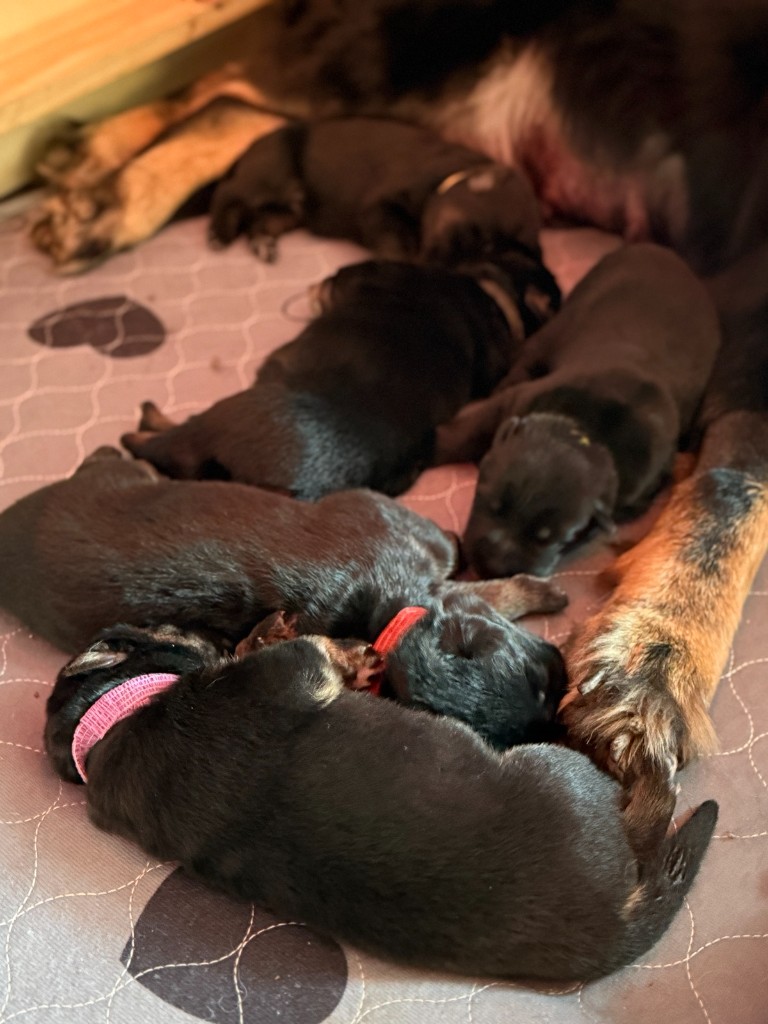
Thankfully, her vision returned gradually (starting with large shapes, now almost 100%). She's steady on her feet, nursing strong, and bonding fiercely. All six puppies are thriving: loud, independent, great eaters with personalities already shining through (one growls hilariously when moved!). Breeding and whelping aren't simple—they're complicated, wrought with risk, and sometimes life-threatening. For most breeders, risking life is part of the job. We accept that to some extent, but it doesn't make the scares easier. Seeing these little "potatoes with legs" yip, bark, and boss their mom around makes every tough moment worth it.
Early Neurological Stimulation (ENS): Giving Them the Strongest Foundation
Because of everything Lucy and the pups went through, we're extra intentional about giving them every advantage. That's where ENS comes in.
Where ENS Came From: Honoring the U.S. Military's Work
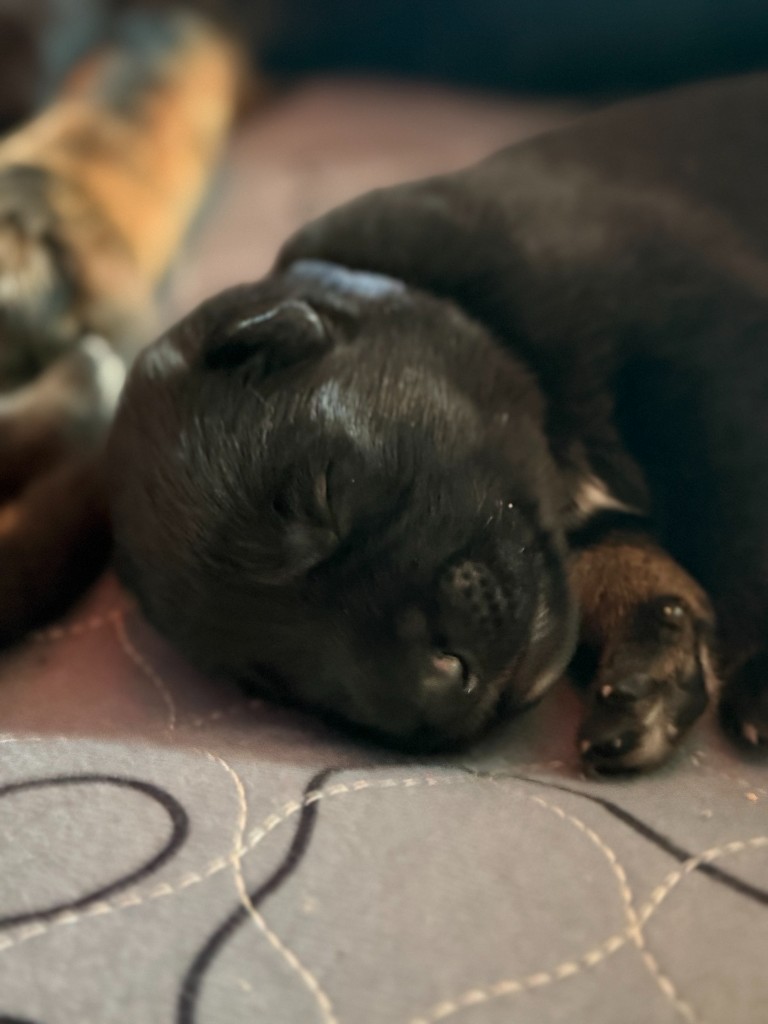
ENS was developed by U.S. military working dog trainers as part of the "Bio Sensor" program (later popularized as the "Super Dog" Program) in the 1960s–1970s. The goal: produce superior dogs for high-stakes roles by improving stress tolerance, cardiovascular performance, disease resistance, and problem-solving during a critical early window. Dr. Carmen Battaglia helped bring this method to civilian breeders through his research and seminars. We owe a huge debt to those military trainers and handlers who innovated and risked for our nation's working dogs—their work is the foundation for what many of us use today.
How We're Doing ENS – With Extra Care
The protocol is simple: five brief exercises once daily (3–5 seconds each), totaling under a minute per puppy. The goal is mild stimulation to "wake up" the neurological system early, not heavy stress.
Key reminders: Keep it brief, gentle, and safe. Newborn puppies squirm—a lot. They twist, kick, and wriggle because they're tiny and uncoordinated. Dropping one even from a short distance can cause injury, so always use two secure hands, work over a soft surface, and never rush.
In our home, I never remove a pup more than a foot or two from Lucy. I position myself so she can see everything I'm doing—close enough for her to smell and hear them. This reduces stress for both mom and pup. Lucy's already been through enough; the last thing she needs is worry about her babies disappearing.
Why We Do This Anyway
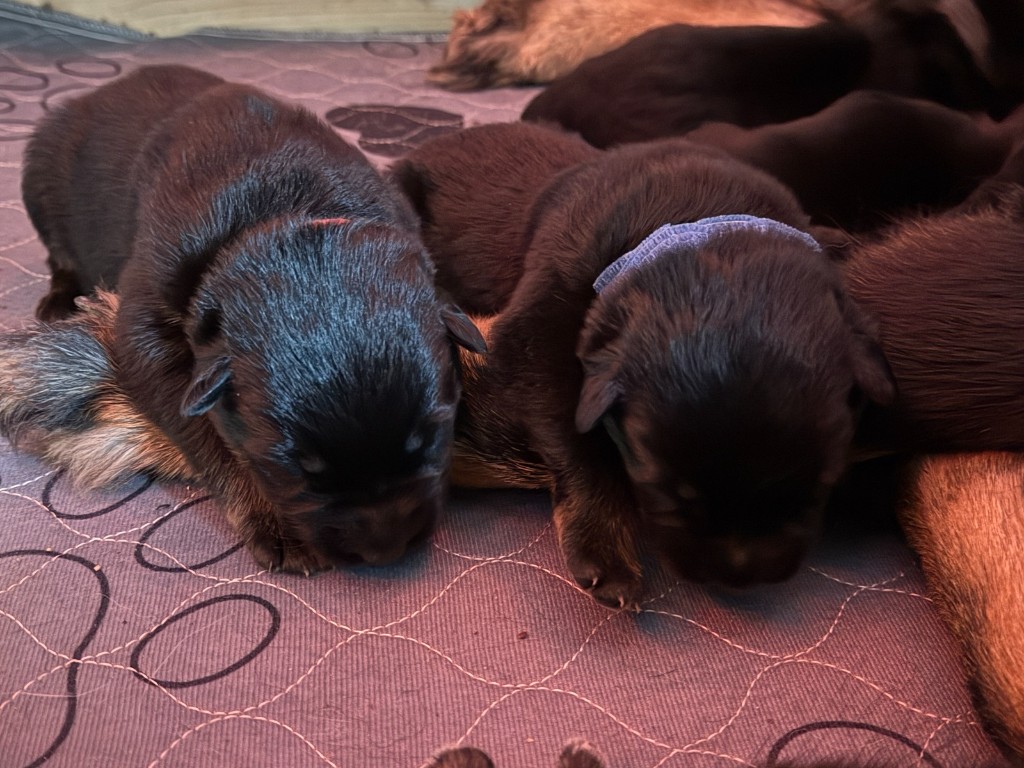
ENS is one small way we're giving these six the best foundation—building resilience for the veterans they'll one day support.
When I finally track down my photography kit (life's been a blur!), I'll properly introduce the Brooklyn 99 Litter to the world—or at least the few kind folks who read this page. Stay tuned for updates on their growth, training, and eventual placements. These pups aren't for sale; they're mission-driven.
If you're a veteran or know one who might benefit from a loyal companion, reach out on X (@WCoffmanPorter). We're here to help.
Grateful for the journey,
Wendi Coffman-Porter
furpower.org