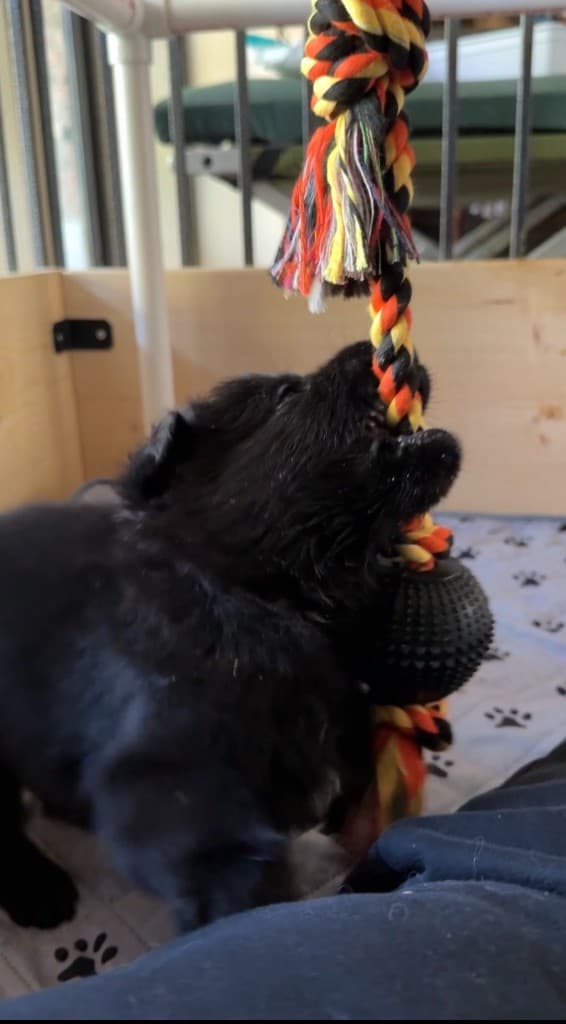
If you have ever watched a litter the way a breeder or trainer watches one, you know it is not a single snapshot. It is a series of small films, shot in the same box, with the same characters — except the characters keep rewriting their own lines.
I have written elsewhere about the broad personality patterns that show up in puppies: push, pull, balance, avoidance. That framework still matters. What I want to talk about here is the rhythm of watching — what I note from week to week, what I treat as signal instead of noise, and where I force myself to stay humble. Because the puppy who owns the room at day ten may look different at week eight, and the quiet one in the corner may be gathering courage — or may be telling you the truth about how they handle pressure. You do not know which until you keep watching.
Why week-by-week matters
Neonates are not miniature adults. Their nervous systems are still wiring; their digestion is still figuring out what “full” means; their social world is mostly warmth, smell, siblings, and — if you are doing it right — careful human hands. A bad day can be a full belly, a rough night, or a dam who suddenly cannot nurse the way she did yesterday. A good day can be timing as much as temperament.
That is not an excuse to ignore what you see. It is a reason to date-stamp your observations and come back to them. I keep notes not because I love paperwork, but because memory lies. The brain smooths rough edges. Written notes keep me honest.
Drive and recovery
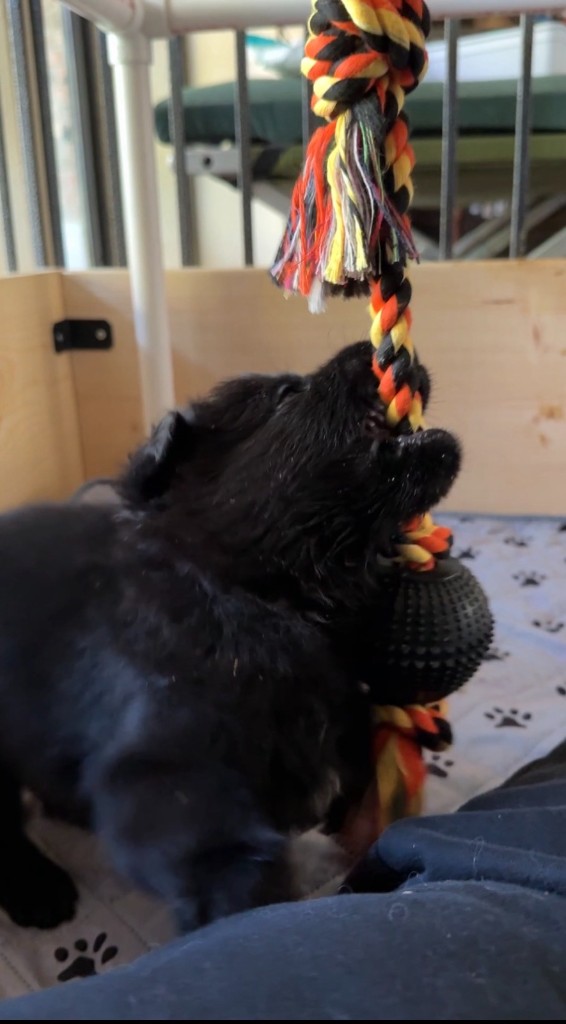
When I say drive, I mean the puppy’s willingness to engage with discomfort and still try again — not manic noise for its own sake. Does the pup fight handling and then settle, or stay spun up? After a stressor (early neurological work, a vet trip, a change in how they eat), how long until they breathe normally again and go back to being a puppy? Recovery speed tells you something about resilience. A dog who cannot come down will pay for that in public work later. A dog who shuts down and stays shut down is telling you something, too.
I am not looking for robots. I am looking for animals who can bend without breaking — and who show you, over repeated days, whether that pattern holds.
Where the puppy aims their attention
One of the clearest early signals, for the kind of work I care about, is who the puppy wants to solve their world with.
Some pups spend their best energy on littermates and the dam. They wrestle, chase, mouth, and sort hierarchy in the pile. That is normal. It is also information. Other pups consistently orient toward the human: not only when hungry, but when curious, fussy, or playful. Still others split the difference — soft with people, fierce with siblings, or the reverse.
None of that is a final grade. It is a direction on a compass. A puppy who is all litter, all the time at three weeks may still learn to partner deeply with a handler. A puppy who rushes you may need channeling so that confidence does not turn into rude public behavior. The point is to notice where their social gravity pulls while their personality is still naked.
Eating when the rules change
The day supplemental feeding starts — or the day the dam must step back because her body demands it — the litter’s world tilts. Suddenly “food” is not only a teat. Some pups take to gruel like they were born for it. Others act offended. Some tank; some surge.
I watch who adapts without falling apart. I also watch whether a poor eater is actually a poor eater, or a pup who needed a different temperature, a quieter corner, or a slower introduction. Fairness to the puppy means separating temperament from circumstance when you can. Sometimes you cannot — and you note that, too.
Voice
I know people who find noisy litters exhausting. I get it. I also hear data. Vocal puppies are not automatically “dominant,” and quiet puppies are not automatically “stable.” I listen for context: vocalization during sleep, during nursing, during play, when a littermate pins them, when you pick them up. A pup who screams at every touch is different from a pup who chatters while playing. A pup who never makes a sound until they are cornered is different from one who goes quiet because they have given up.
Sound is one more line in the log — never the whole story.
What three weeks cannot tell you
Here is the line I will not cross, no matter how tempting it is for someone to ask for a promise: I will not crown a three-week-old puppy as a finished working prospect.
I will tell you what I see today. I will tell you what pattern seems to be forming. I will tell you what would worry me or excite me if it is still true in a month. I will not pretend the future is locked. Genetics set the stage; life on the ground writes the play. Illness, injury, a bad match with a handler, or simply growing into a different shape than the early weeks suggested — all of that still lies ahead.
If you are choosing a partner for someone whose safety may depend on a dog, patience is not kindness only. It is accuracy.
So I watch. I write. I correct myself when last week’s note no longer fits. I celebrate the pup who surprises me and honor the one who tells me early that public life may not be their path.
The litter keeps teaching — if you are willing to read it week by week, not just once through a camera lens or a single visit.
Strength stands watch.
And so do I.
Wendi Coffman-Porter
Real handler, real stories, real dogs.
FurPower.org